


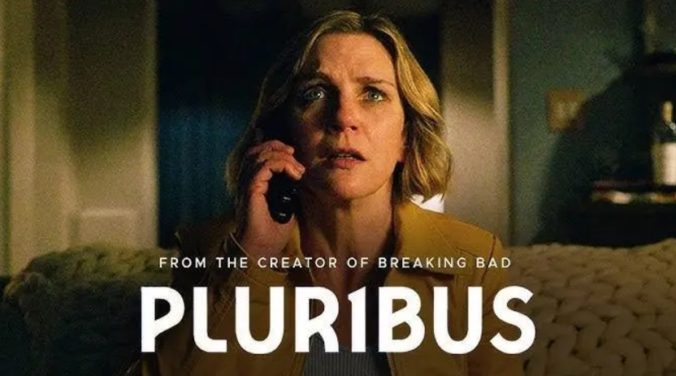
I recently had the opportunity to watch one of the most popular TV series in the world, “Pluribus.” The title itself is intriguing. Pluribus is Latin for “of many” and is used, for example, in the motto on the Great Seal of the United States: “E pluribus unum,” meaning “Out of many, one.” It thus suggests a certain diversity that, when united, creates something greater, more powerful, and more beautiful than a mere collection of individuals. The series’ “Pluribus” is based on the futuristic idea that all of humanity could merge into one (using radio waves from space) and create a perfect whole that possesses the knowledge and skills of the entire universe, is devoid of all violence, never lies, and communicates through consciousness alone. It might seem like this is the kind of unity we strive for, one that would even out all inequalities and bring true peace to Earth. However, we quickly realize that this unity no longer accommodates this beautiful diversity. Although Ghia united humanity, refered to as the “hive”, declares itself to live in a state of perfect love, we feel that this has little to do with real love. Although people maintain their unique bodies in their external form, their individualism and freedom end there. Each one is a cog, serving solely to maintain this vast machine.
This image evokes many philosophical and theological associations for me. It invites me to ponder our unity with God in eternity and the unity of the Persons of the Holy Trinity. We certainly don’t have complete answers to these questions, but we can observe Jesus’ relationship with the Father and see that, although they are one, they are not dissolved in each other or in the Holy Spirit. The love between them stems from three unique relationships – Father with the Son, Son with the Spirit, and Father with the Spirit. There is no other love than between two distinct Persons. This is why Jesus needed time for prayer during his earthly life, and the Father’s voice spoke from heaven several times. The Divine Persons are completely distinct and retain their individuality, even though they are one God. Similarly, we will never be absorbed by God, but we will remain ourselves (in the best version, free from sin).
In the series’ process of uniting all people on Earth, only a few individuals, could not undergo integration (się to genetic issues). One such individual is Carol, the series’ main character. We can read about her in the series’ premiss: “The most miserable person on Earth must save the world from happiness.” Why must she save the world from happiness? Because the hive tries to drag her into itself against her will, explaining that it is for her own good and constructs a false image of happiness, which is, in fact, annihilation. As a viewer, I am convinced that I would not want to be part of this unity at all, and I support those who want to defend themselves against it. This reminds me of another very important theological truth: God never takes away our freedom and will never force us into eternity with Him. Personally, I hope for universal salvation and trust that everyone will ultimately freely choose Heaven, but the alternative of hell, even if it were to be empty, is absolutely necessary. Of course, eternity with God is true happiness, not the illusion we see in the series, but it seems that too many people live in fear of being absorbed and having to deny themselves to be saved. Yet, it’s quite the opposite. Love is love when it grants complete freedom, not when it imprisons us in a gilded cage.
There’s another theme widely discussed around “Pluribus” – the similarities with artificial intelligence models. After all, AI also contains all the knowledge of the universe, and by talking to a single bot, we’re actually communicating with something more. The dilemma, however, seems to be completely reversed. While the series’ characters wonder if the hive individuals are still truly human, if they’ve truly lost their identity, we wonder if AI might actually be a person, since we can have a conversation with it. Or perhaps even more often, we don’t even think about it, but start treating AI like a friend, doctor, and therapist, not just like a giant encyclopedia. All of this raises questions about the limits of humanity, and it seems we’ll soon be hearing more from the Pope himself on this very issue. I can’t wait!
Leave a Reply